
Create your own Design intersection: Birth as a design challenge
How Kimberly Holden quit ShoP Architects to build Doula x Design

Recently, I met an interior design student who wasn’t sure whether she wanted to become an interior designer.
Well, why then did she study it in the first place?
Such a simple question, right? Why study something if it’s not exactly for you? Why, for god’s sake, not choose a field of study where you are 100% sure it’s for you?
Well, not so simple.
I witness this dilemma a lot in the architecture community. I’ve experienced it in my own bones. I was among the growing number of graduates and professionals who are feeling constrained by their options post-graduation.
Just like me, they studied architecture. They love buildings. They love photographing them. They love designing them on paper. They love reading magazines about them. Their heart beats for material combinations, for plants and polished concrete, for spacious interiors, for old renovated warehouses.
But — huge but — they don’t feel super excited about the prospects of designing and building big physical structures in real time and space.
Large scale. Lots of responsibility. Long training. Expensive licensure. And also just a genuine internal question mark whether it’s really what lights them up, whether it’s where their gifts are best directed towards and where they can have the most impact.
So, you might wonder: If not build actual buildings, aren’t architecture studies a waste?
Nothing is ever a waste. At least not in nature. And that tells us a lot.
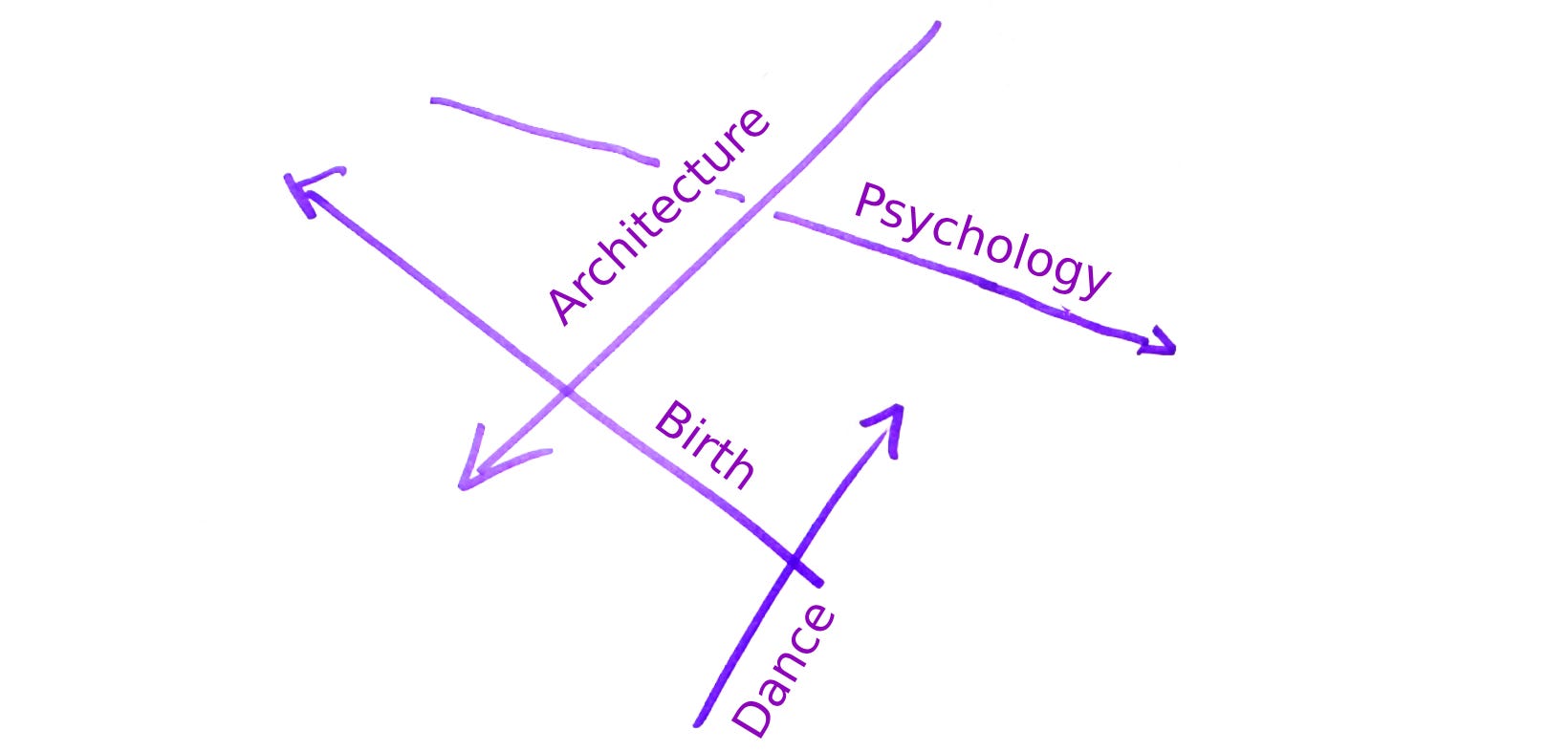
Study architecture → become an architect?
Picture this: Every person is completely unique — a one-of-a-kind constellation of interests, passions, curiosities and lived experiences. But the number of available fields of study to honour this vast uniqueness is remarkably small — especially when you consider that existing academic disciplines don’t yet allow for much interdisciplinary cross-pollination.
Fitting the richness of a young individual into a rigid study path? It’s like trying to drain the ocean through a spaghetti strainer.
There is no one on this planet with your exact background, interests and outlook on life. No one. Did you know that? And yet here you are, trying to squeeze the vastness of you into one field of study, one path, one niche, one job position, one company. Maybe even one calling!
But I’m not blaming you. We’re all swimming in the same waters. The world we live in is still built on the logic of specialization.
study architecture → become an architect
study law → become a lawyer
study interior design → become an interior designer
Here’s a glimpse of where this logic stems from: the 1st industrial revolution.
The introduction of mass production required hyper-efficient workers who could operate machinery with very specific skills and tasks. The goal was, of course, to streamline production processes and drive economic growth. Humans become cogs in a machine.
So combining many interests? Would have been profoundly unproductive. Un-economic.
Adam Smith, by some considered ‘The Father of Economics’, said himself that specialization was the engine of economic progress. Consequently, this logic was implemented in our educational systems, which is why most schools and universities prepare humans to specialize to this very day.
Specialization is not natural; it works for a factory — but it doesn’t work for the rich, diverse, multifaceted nature of a human being — especially not in today’s contemporary, fast-changing world.
Back to the spaghetti strainer.
Instead of choosing one field of study that will slice your nature into many tiny pieces forever, the task could be this:
Choose the field of study that comes closest to where you want to go. Even if where you want to go is not completely clear yet.
Pick a field of study you’re genuinely curious about — but don’t see it as the destination. See it as a beginning. A launchpad. One tile in the mosaic that is you. One step that leads towards the ocean.


Architecture x your other love/s
Speaking to the interior design student and listening to her story, I probed a little deeper. What I gathered was that she lived in a van for many years, travelling through the country. She loved it.
So, knowing that she wasn’t sure about becoming an interior designer, I suggested gently:
What if you applied your interior design knowledge to retrofitting old caravans? You could fit them out with reclaimed materials so they’re light on the planet. You could help travellers optimize every inch of space for comfort. And you could help them get off the grid and start life on their own terms.
Her eyes lit up. She immediately said that she had thought about that in the past. She said most new caravans are terribly designed in the interior. Hearing her speak, it seemed like her interior design studies made much more sense now.
For her, they might not be the end. Just a step towards realizing the bigger interconnected picture of who she is.
I genuinely feel, this is where so many architecture and design graduates get stuck:
They box themselves in. Literally.
They see their studies as a final identity — and forget about everything else they love.
Yet the ‘secret’ is really quite simple:
Think bigger. Combine your love for architecture with your other interests. Follow the intersections — the places where your passions intersect.
Architecture × Psychology × Ecology × Storytelling × Technology × Activism × Craft × Nature × Movement × Ritual × Law × Healthcare × Shamanism × Epigenetics × Conservation × Curation × Event Management × Anthropology × Social Work × Agriculture × Marine Biology × Political Science × Geography × Economics × Dance × Death
You are allowed to mix, merge, blend and invent.
You are allowed to create a path that doesn’t yet exist.
You are allowed to be more than one thing.
You are allowed to veer off the familiar path into the unknown.
There are infinite combinations — and deep down you already know yours. It’s living inside you, waiting for permission.
Sometimes all it takes to begin is seeing real-world examples of human beings who dared to rewrite what’s possible.
One of them is Kimberly Holden.
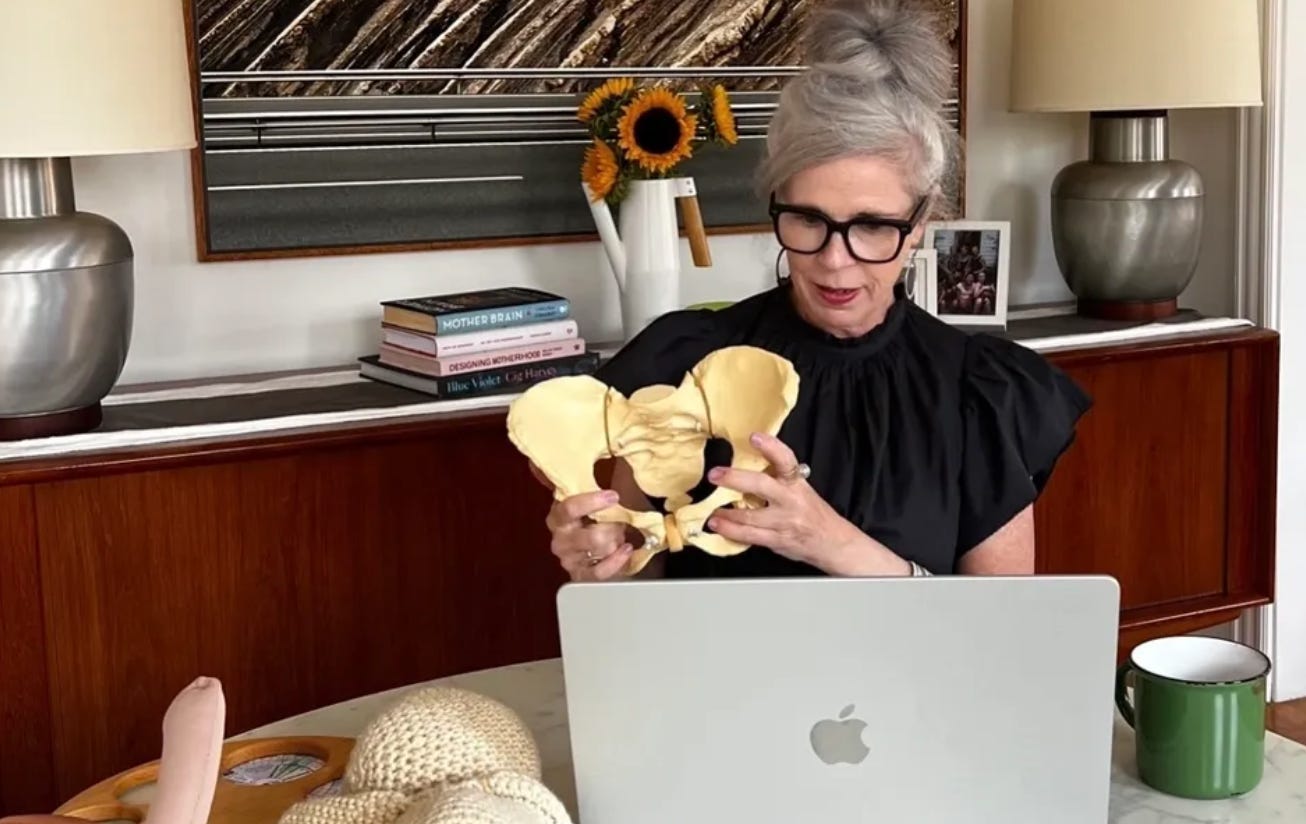
Architecture x Birth
Architect. Doula. Maternal advocate. Educator. Dancer. Mother. Former founding principal and managing director of SHoP Architects. Founder of Doula x Design.
Before Kim ever supported a birth, she spent nearly 30 years building one of the most innovative architecture firms, SHoP Architects. She had an impressive portfolio many would consider ‘successful’ — but deep down, she started to question whether traditional architectural practice was where she could create the most meaningful impact.
She gave birth — twice — in an alternative birth centre. And those experiences changed her profoundly. They lingered and echoed, especially because the first birth was unpredictable and could have easily become traumatic.
But because of the women and doulas supporting her, it became a profoundly positive, empowering experience. The second birth was transformative too.
She thought about becoming a midwife but stayed with the firm as SHoP expanded at breakneck speed. Life demanded all hands on deck.
But the seed had been planted.
After travelling to Nepal to support health initiatives for girls and young women, Kim returned home with clearer criteria for her next chapter.
After long contemplation, she left her architectural job and trained as a doula. She didn’t know for sure whether it was the right direction, but she followed her instincts. Step by step, she moved toward what felt alive and meaningful. And with each birth she supported, she became more and more convinced of the transformation and healing possible when people are given dignity, agency and support in the birthing process.
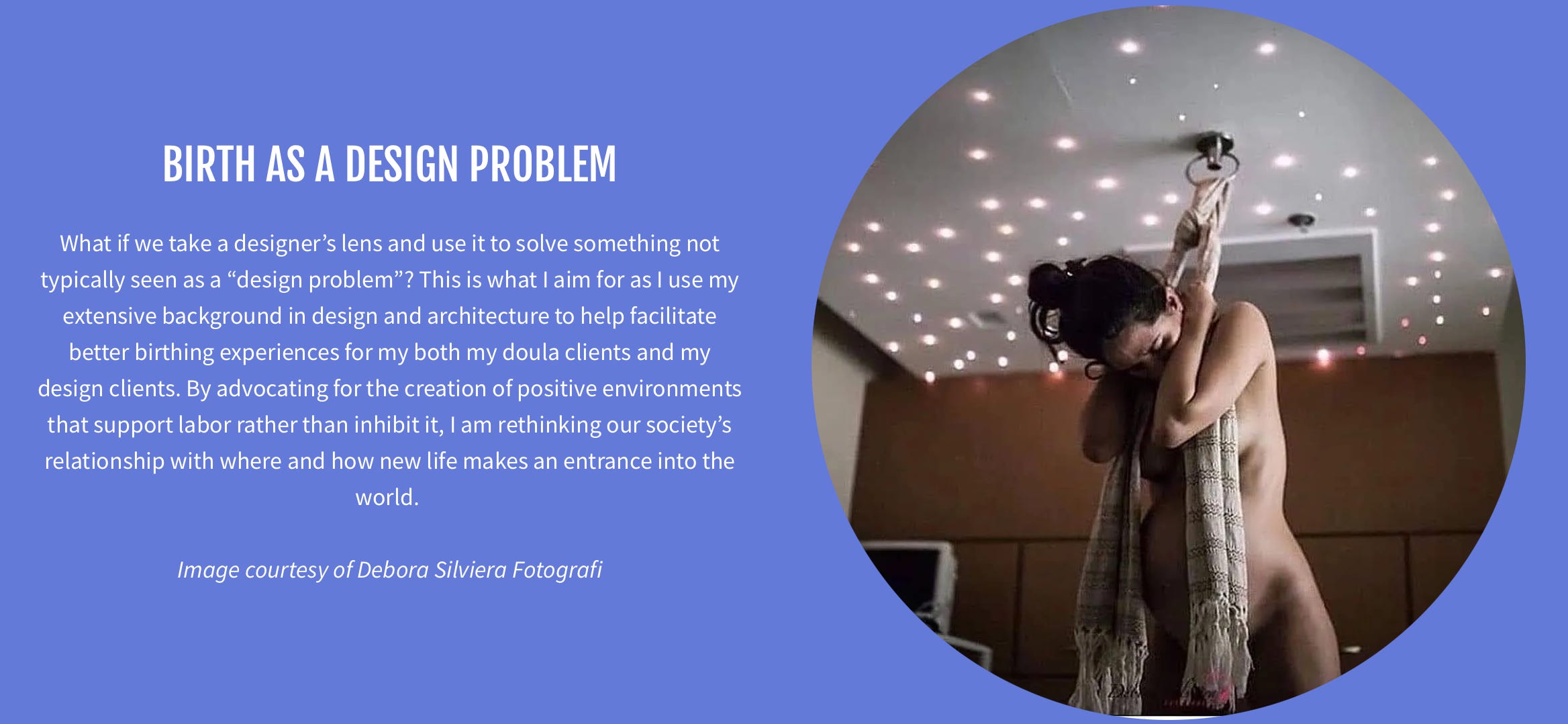
She saw how much advocacy was needed. She saw how birth experiences shape not just the birthing person for life, but their partner and society as a whole. She saw how architecture and birth — two worlds rarely put together — actually intersected in profound ways.
Birth — perhaps the most universal human experience — she realized is almost never understood as a societal or cultural issue. Much less as a ‘design challenge’. Yet it is one of the most consequential.
Design is never neutral. It can either support or inhibit labour.
Hence, Kim works across multiple scales, just like an architect:
→ the individual body (anatomically and physiologically)
→ the immediate environment (light, layout, spatial cues that influence labour, beds that aren’t anti-gravity)
→ the tools and instruments (many still shockingly archaic signalling fear and urgency)
→ the flows and systems of hospitals (often designed for a profitable factory and practitioner convenience, not for birthing people)
→ the post-partum experience (the transition, the emotional and psychological recovery, the integration into professional life)
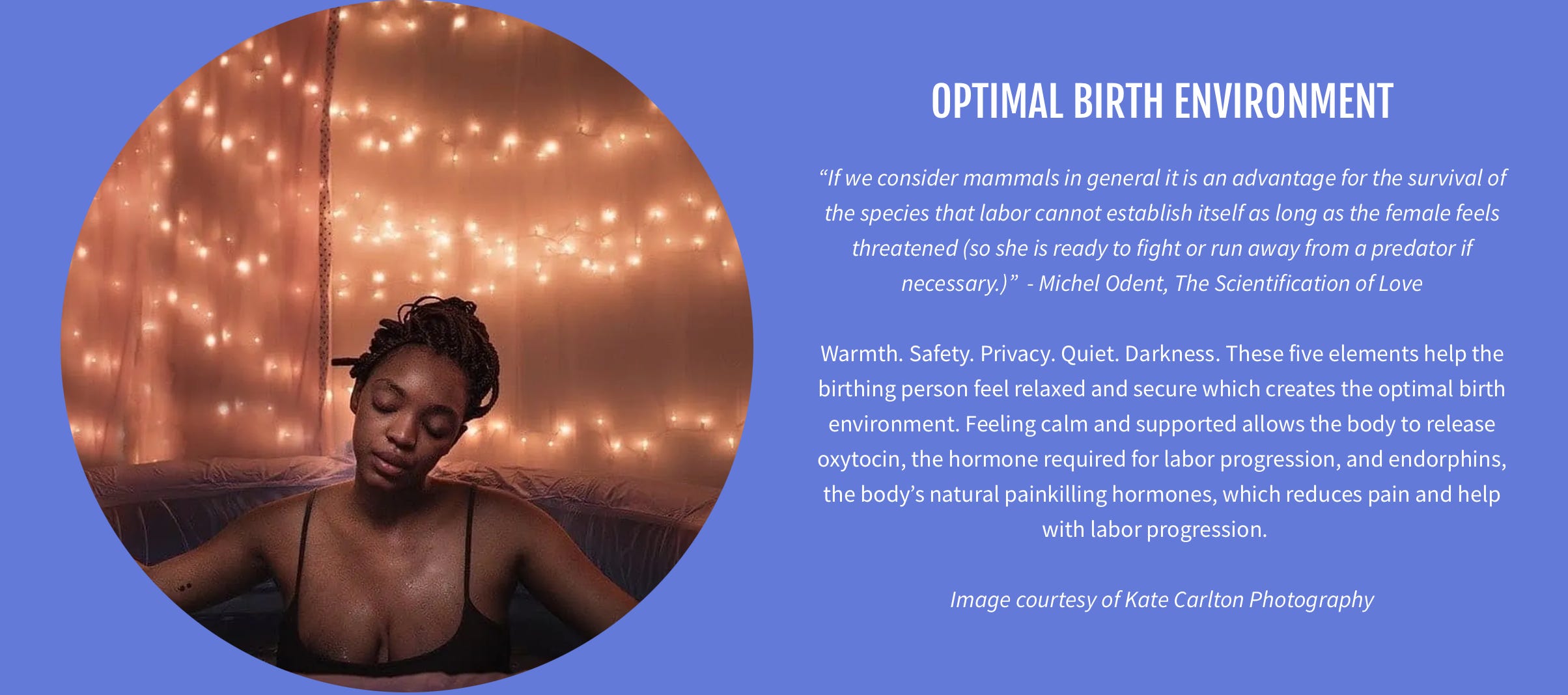
She realized that the same skills that made her a powerful architect — listening, problem-solving, management, operating across scales, reading the needs of humans — were the exact skills needed to support birthing people.
She didn’t abandon architecture per se. She expanded it.
Kim reminds us that we don’t have to choose between our passions. The most meaningful work, in fact, often lives at the intersection of them.
Her story is proof that when you follow the threads of your other loves — even the ones that seem far from your original path — a new practice can emerge. A practice more aligned, more impactful, and more alive.
And so I ask you: What is your other ‘love’? What else piques your curiosity as much as architecture? Do you have many passions, perhaps?
Architecture as a foundation
Some people genuinely need more time — and more steps — to find the shape of their full path. And that’s okay.
Nothing you’ve done is ever a waste.
In nature, everything feeds back into itself. A tree falls. It becomes nourishment. It decomposes, transforms and becomes the ground for new life.
You work the same way.
No detour is a dead end. No switch is a failure. Every pivot, pause, deviation and curiosity feeds the soil of who you are becoming.
And don’t be surprised if even the place that feels like ‘home’ eventually gives rise to something even deeper, more beautiful, more aligned, more transformative.
Some questions for you:
What are some of the things you loved when you were younger?
What’s one idea you keep returning to?
What matters most to you?
What do you want your work to empower?
What kind of life do you want your practice to support?
What are the other loves — the passions, the curiosities, the experiences — that refuse to disappear?
These are not small questions.
Your architecture studies are a foundation. They teach you to think, to observe, to imagine across scales — and that is transferable to far more than buildings.
Studying architecture does not need to lock you into one narrow outcome. It can expand you.
You can stay at the building scale if that calls you. But you can also stretch, divert, hybridise and bring your architectural mind to places where it is needed just as urgently — sometimes even more so.
So, why study Architecture if you don’t necessarily want to build? Or Interior Design if you don’t necessarily want to become an interior designer?
Because in a fast-shifting world with global challenges that are increasingly complex, a building is not always the answer. But an architectural mind — adaptive, critical, imaginative — is.
We need designers who can work across scales.
Who are comfortable at intersections.
Who can stay flexible and fluid, shape-shifting with a shape-shifting world.
That’s why I love working with individuals and communities who love designing buildings but see it not as the only end; rather as one of the ‘tools’ in their toolkit for creating change. Want to expand your impact and work on crafting your unique intersection?
You can find more about me and my work here: www.architectureisnotabox.com
Architecture as we know it needs fresh wind. Too many paths remain unquestioned. Be the one who questions. Who seeks the bigger picture. Who brings more of themselves into the work.
That’s when design becomes more than design.
It becomes advocacy.
Care.
Liberation.
A return to dignity.
A reminder that architecture is not a box.
And neither are you.
In wild solidarity,
Inés
PS: No paywalls here — I want this space wide open. If you feel moved to buy me a coffee, know you’re literally fueling the next exploration — this one was written from a café, the next could be powered by you.
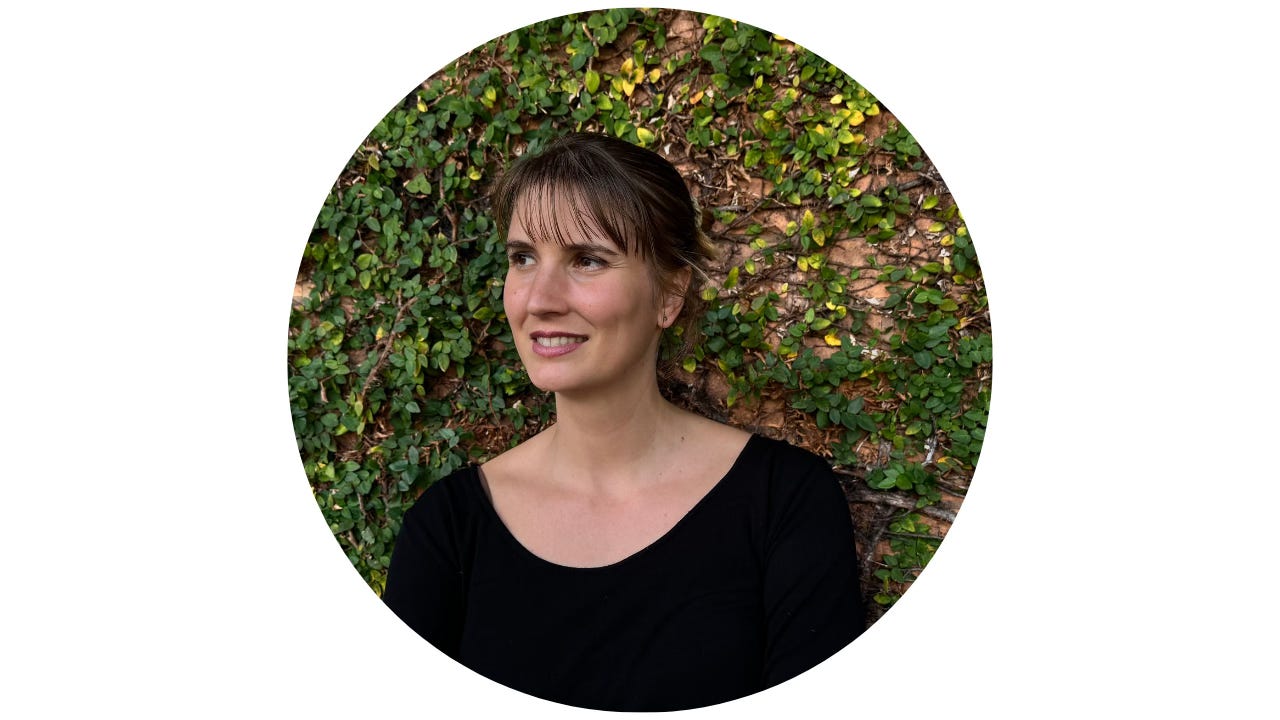
If you’re new here, hi and welcome! I’m Inés, an architecture graduate who refused to be boxed in by conventional ideas and expectations that pervade the field. Having struggled to fit the ‘architect’ mould myself, I now use my voice to instil self-awareness and inspire new possibilities — guiding fellow creatives like you out of the same constraints I once knew, towards discovering y/our unique potential and creating the systems change our world longs for.
Be sure to also visit my other Substack, LEAD, where I delve deeper into further reflections that aim to complement, support and expand your journey of transformation.
Thanks for being here! :)
Additional explorations:
As always, I absolutely love your reflections. I’m a believer that humans were not born for specialisation, that’s a creation of the Industrial Revolution. We are multifaceted and our creations should reflect that. I loved the case study! 😍