
You don’t have to build to belong
Justice in a form-obsessed world

Are you caught in a loop of trying to prove your worth to others in the industry? Are you obsessed with form?
There’s a prevailing idea in both the architecture world, and the world at large, that success means designing something physical. Something that’s built, seen and manifested as a physical object. Even better if it's published, visited, photographed and admired by many. The more visible it is, the more celebrated it becomes.
It’s quite a harsh, linear way of being: you are only a proper architect if you design a building. You’re only ‘architectural enough’ if it’s built.
It’s a deeply masculine worldview — that something is only valid if it's visible, measurable and tangible. If it can be achieved through form.
And so, of course, almost everyone who studies architecture rushes to get that ‘architect’ title after graduation — so that they can design something, and build. So that they can present something ‘physical’. Because only then, it seems, are you seen as successful.
Visible form as the measure of worth:
Study architecture -> become an architect → design a building.
That’s seen as the dominant way to be architectural.
But is it?
This idea that something only matters if it's visible and tangible is not just tied to architecture. It’s tied to the collective consciousness — something seems only valid if it’s seen.
Because if something can’t be seen, it can’t be counted and is often treated as if it doesn’t exist.
Anything invisible is basically dismissed.
You can see this in how data is collected in cities: we measure how many people pass through a plaza — as if that’s the most important thing. But data on how many women feel unsafe in that plaza? How many leave before sunset because they don’t feel safe? Those experiences are less tangible, less objective, so they’re often dismissed, excluded, forgotten altogether. Not measured. And because they’re not measured, in many people’s eyes, they don’t exist.
But you and I know that these invisible realities matter. We know they’re real.
Empathy can’t be measured, but it’s there. Compassion can’t be graphed, but it moves mountains. Transformation can't be reduced to metrics. Dignity can't be spreadsheeted or formalised, but it transforms lives.
The most profound human experiences resist quantification. They live in the spaces between numbers, in the pause between tasks, in the way a designer's generosity can shift someone’s entire livelihood. These immeasurable forces shape our world far more powerfully than any algorithm or data set ever could.
And yet, the (architecture) world, generally form-obsessed and outcome-based, has forgotten that. I have forgotten that. And probably you too.
Where are you rushing through life, trying to tick off boxes by a certain age? Do you tie your worth to how much output you create? Do you glorify busyness and guilt yourself for resting?
I can see how deeply this conditioning lives in me. I still tie my worth to what and how much I externally produce. How many words I write in a day or month. How much money I make. How many likes or comments my posts receive. I feel it in the work I’m here to bring forward. To top it off, I judge myself for feeling that way. But I’m aware of that too.
Awareness is key.
It’s so easy to fall into this loop of performance and productivity when the world worships speed and productivity. In this worldview, even rest becomes something you have to ‘earn’.
But slowing down — that's a radical act. A superpower. It’s the feminine to the masculine. It reconnects us to nature and the deeper rhythms of life.
The wisdom of slowing down:
Have you recently walked through a forest?
Speed doesn’t matter to the Earth. A plant doesn’t force its growth. A seed blossoms in its own time. You can’t overwater it or shine more sun on it to make it hurry. A mountain doesn’t perform. A river doesn’t hustle.
The concept of performance just doesn’t exist.
There’s a natural unfolding where everything happens in its own time. And slowing down returns us to that truth.
There is wisdom in not-doing.
I want to invite you to remember that.
Where in your life have you taken on this masculine idea that you’re only worthy if you produce and hustle? If you create a certain number of posts a week? If your work fits into a neat little metric that an algorithm approves of? If you work for so-and-so’s firm after graduation? If you have prestigious buildings in your portfolio?
In other words:
Where are you still measuring your success through someone else’s lens, and where are you being invited to slow down?
This isn’t just about architecture — not really. But of course, it connects to it. We all know how stressful architecture school is. The studios. The exams. The constant pressure of never having enough time, never being enough. And all the subjects that don’t connect, which doesn’t help.
Constant deadlines. Constant output. And ruthless competition — some of it built into the system, yes, but also perpetuated by us students, graduates and professionals. You learned to push, push, push, perform and prove through what you could produce.
Then you carry that into practice, onto the treadmill of the industry, the relentless machine where your value gets reduced to billable hours and square footage delivered.
But I want you to consider this: your worth is already whole. It’s already complete. There is a different way of being in the profession. And you don’t need to earn it through productivity.
You don’t need to be producing something tangible all the time. Your contribution doesn’t always need to be measurable or relatable to traditional practice. You don’t need to always be doing.
How much do you actually rest? When did you last sit quietly without sketching, without thinking about your next project or move, without planning?
It’s in the slowing down that the most profound insights arise — those insights that change how you see space, how you understand what people need, how you sense relationships, how you feel nuances, how you approach life itself.
So if you’re in a season of questioning — trying to figure out your next step, what kind of practice to join or create, whether to stay in traditional architecture, how to make it all work — I invite you not to push. Not to force clarity. But to pause. To listen. To let the answer come to you in its own time.
Like a plant or a tree that blossoms when it’s ready. Your job is to tend to yourself. Go for a walk. Catch some sun. Read a book. Engage with other disciplines. Have conversations that have nothing to do with architecture. So often, the most transformative insights come not when we're grinding but when we're simply being present.
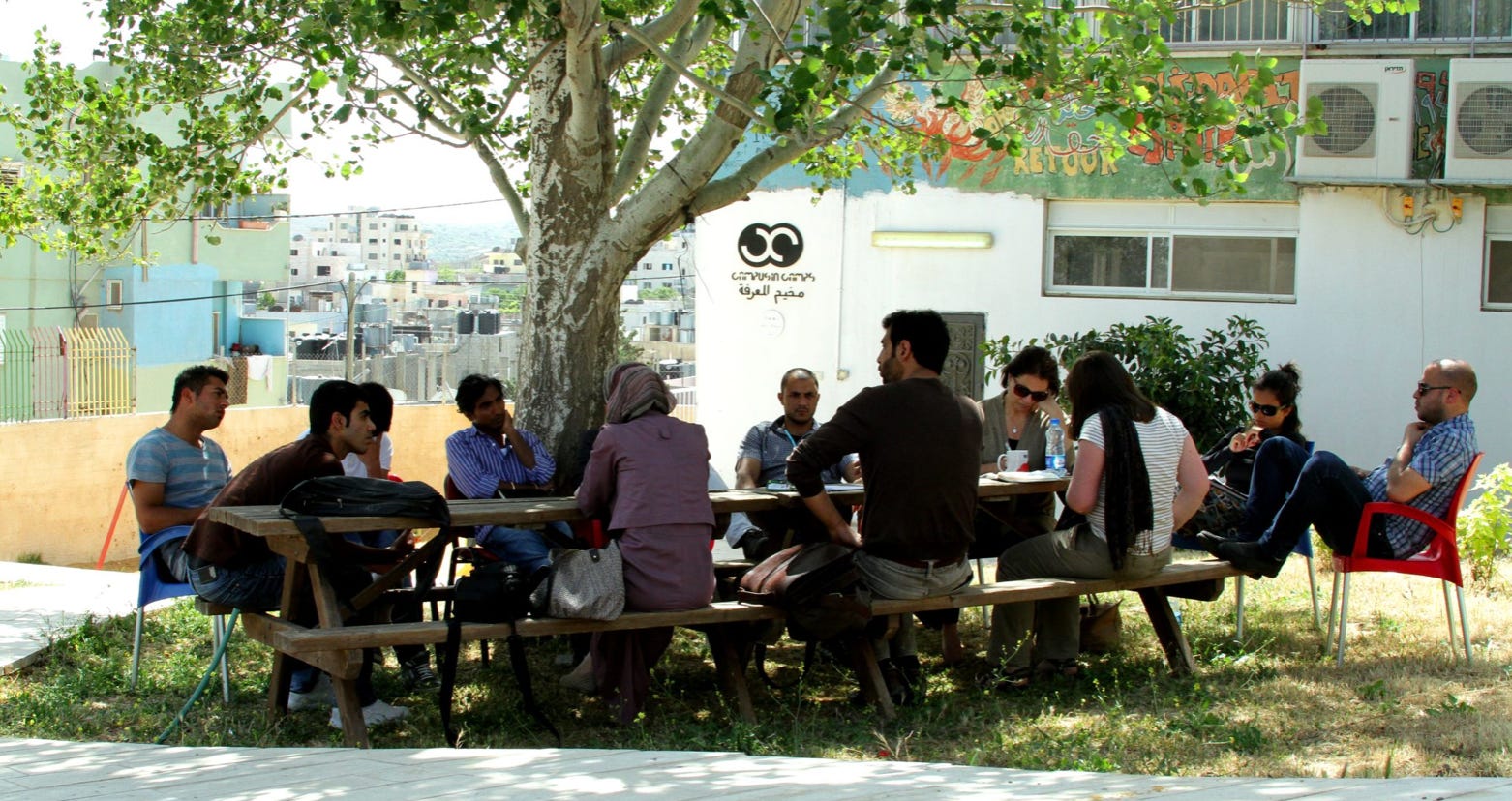
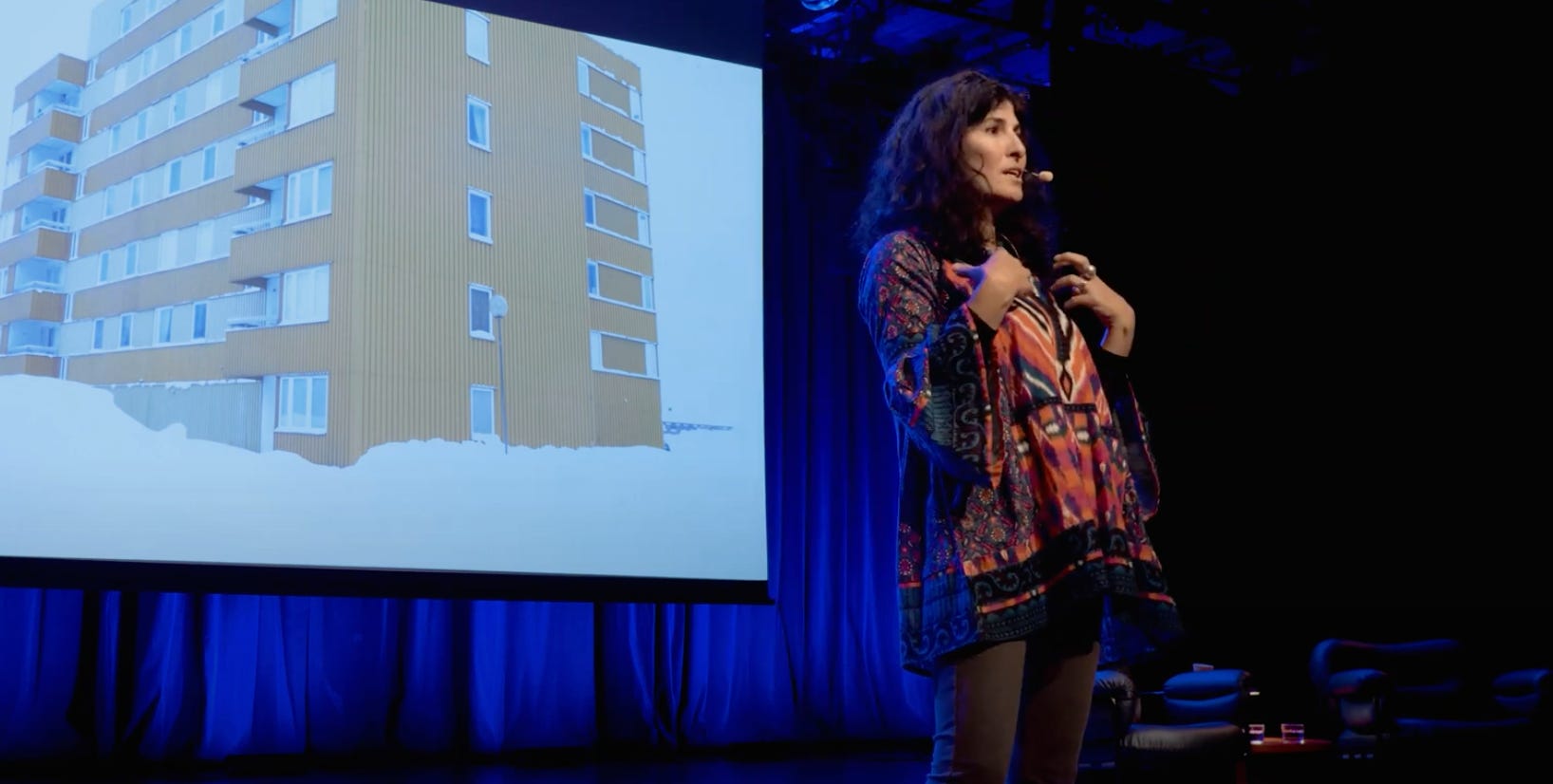
Take Sandi Hilal, for example. A Palestinian architect, writer, researcher and co‑founder of DAAR — Decolonizing Architecture Art Research. Instead of chasing buildings, she began her journey through conversations — collective conversations around decolonisation, which she was deeply familiar with. Conversations where like-minded people could grapple together with questions of justice, displacement, belonging, memory, heritage and presence in occupied spaces.
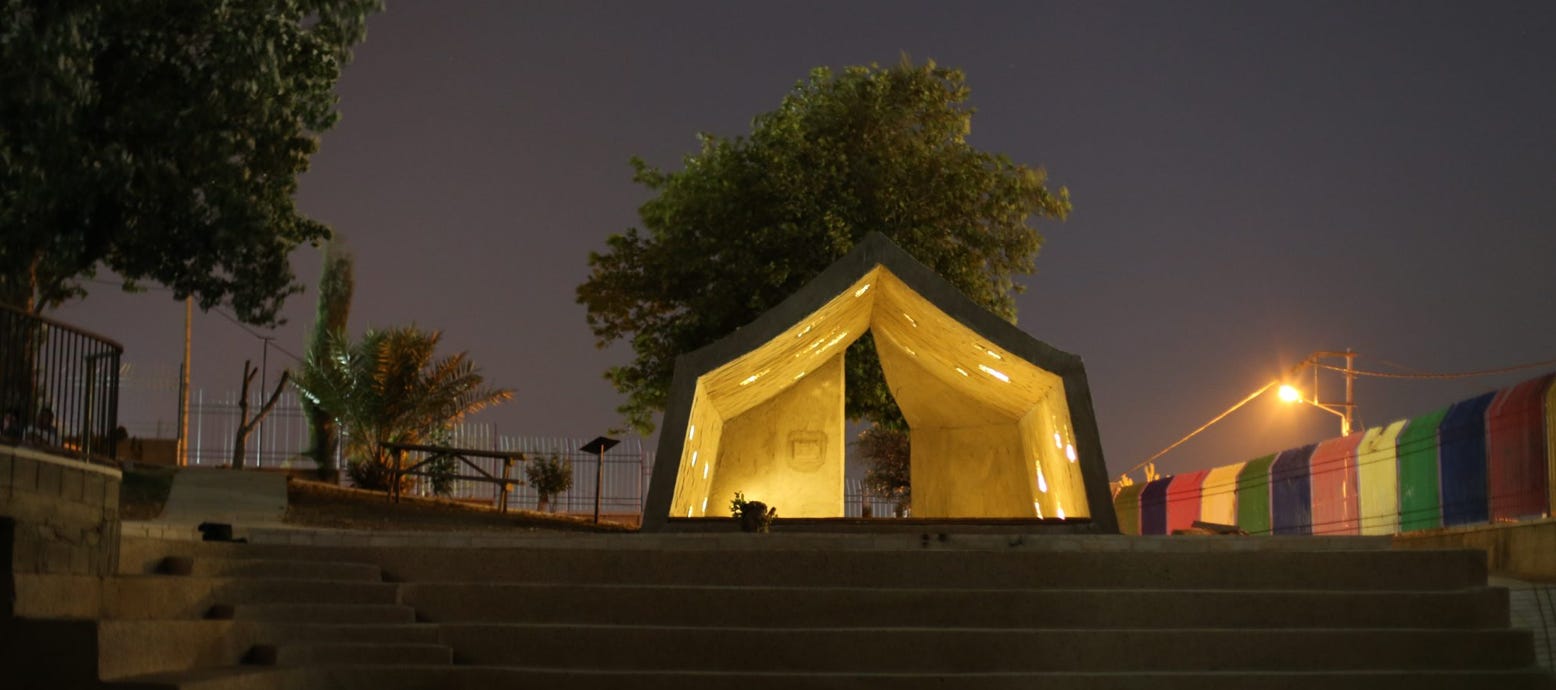
Through DAAR, she and her partner, Alessandro Petti, launched research‑driven projects like Campus in Camps in Dheisheh refugee camp and interventions in Shu’fat camp that facilitate learning and sharing. Every project emerges from critical dialogue, ongoing collaborative reflection and political commitment before it’s decided if a spatial intervention follows.
Does this make them any less architectural?
In Sandi Hilal’s words, ‘Architecture is a holistic thing, and I understand form is extremely important, but form is created in order to do something, and that something needs to be discussed’
You're not less architectural if you choose not to design buildings, or if you don't create physical structures.
You are no less architectural:
The spaces we build reflect more than structure. They express what we value, how we relate and the kind of future we believe in. Buildings aren’t just made from materials and technical skills — they’re made of choices, stories and systems.
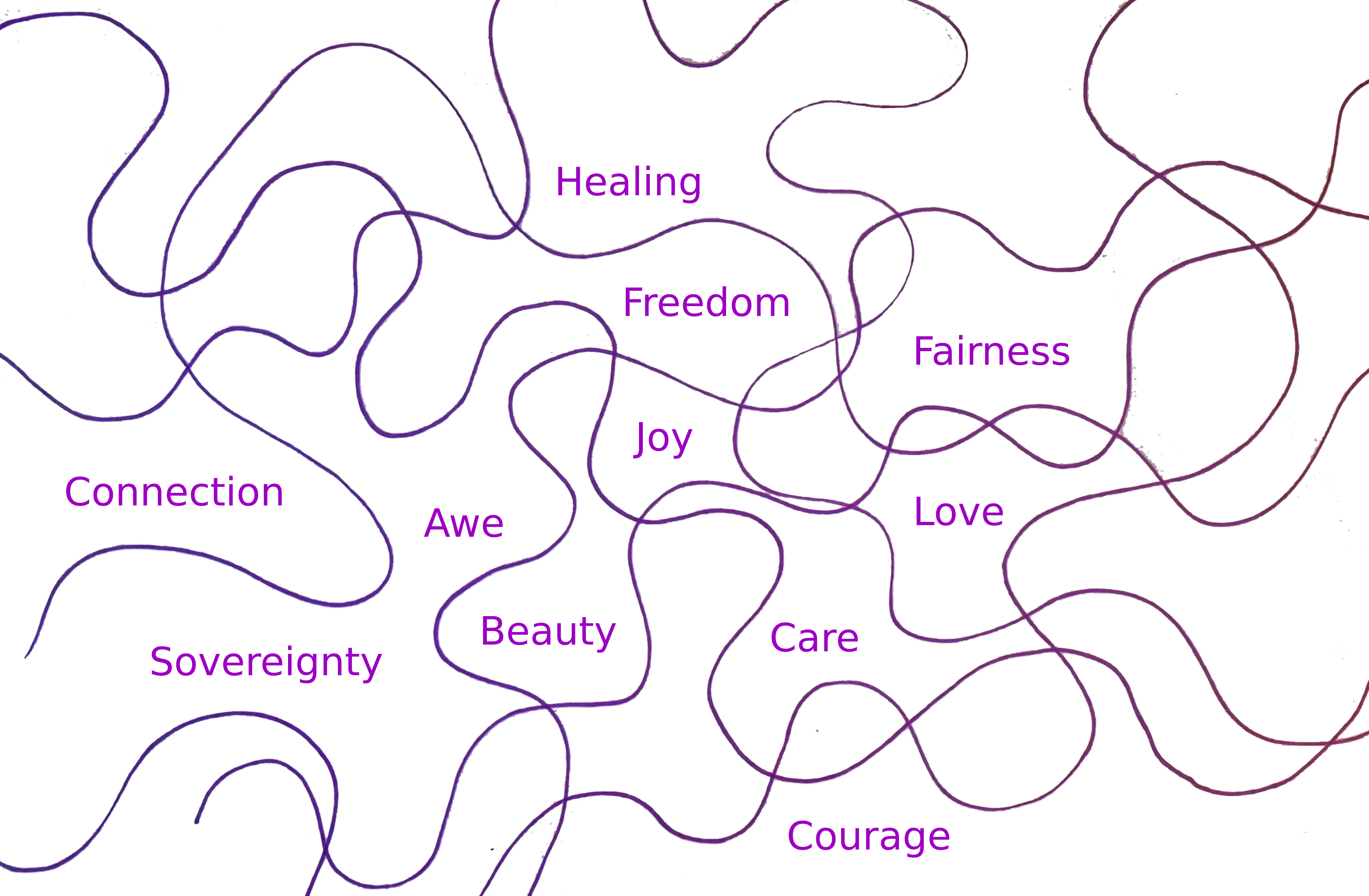
At its best, the (built) environment becomes a mirror of what matters most: freedom, fairness, connection and beauty.
A temporary urban intervention that’s fully wheelchair accessible — that’s fairness made visible.
A co-living model that includes both quiet areas and shared kitchens — that’s freedom made visible.
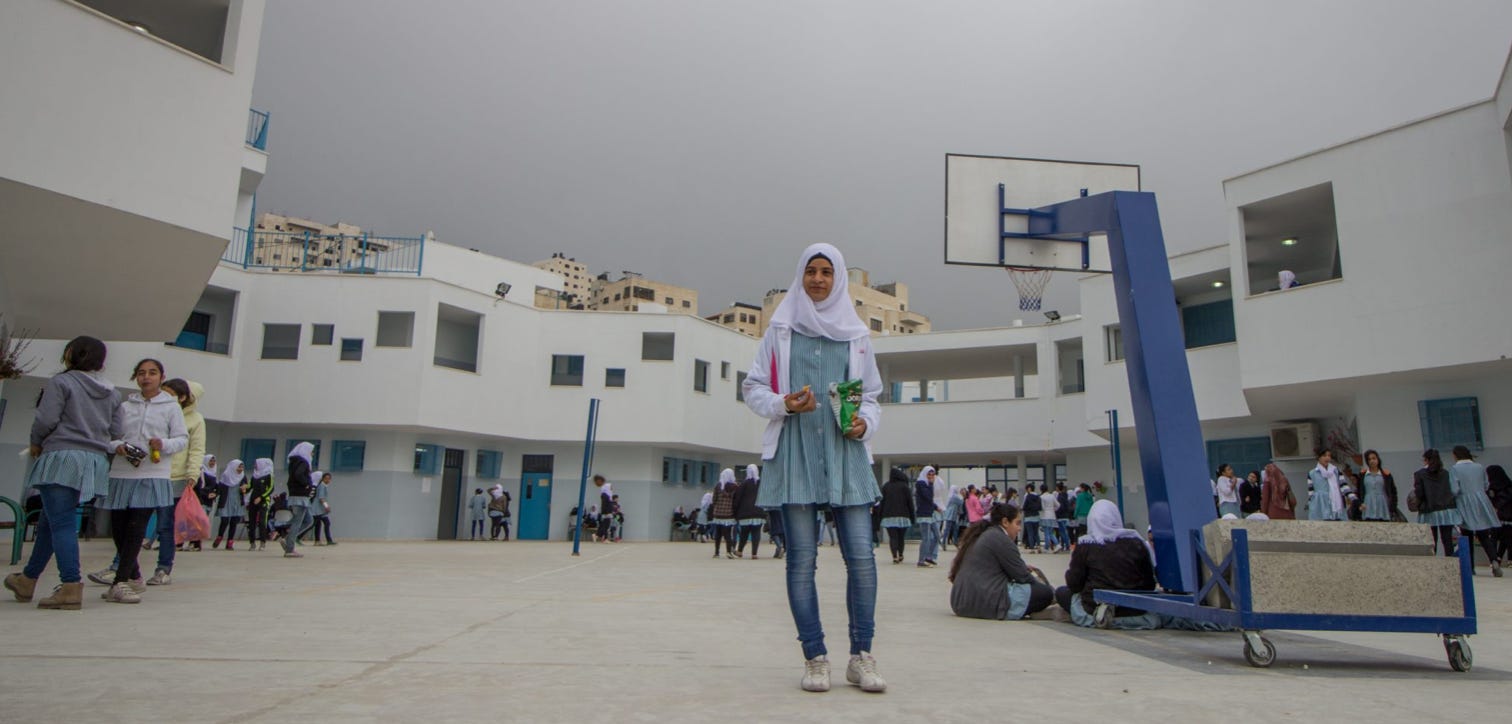
A school built with natural light, local materials and gives back to the community — that’s connection made visible.
All unite rather than separate, which makes them utterly beautiful.
So becoming an ‘architect’ is not the only way to contribute. And designing luxury buildings for the wealthy isn’t either.
Maybe it’s about re-defining ‘luxury’ altogether, not for the few but for the many?
I was watching a movie the other day called The Swimmers (highly recommend!) and it was just crushing to see how refugees escape war in their country by crossing the sea only to face more trials on land.
You’d think the hardest part of the journey is surviving the water. But that’s just the beginning. Getting across borders. Facing rejection. These many traumas compressed into such a short period can turn any sane person into a criminal.
This is where y/our role can begin — not just as designers of space, but as shapers of human of non-human life.
No one’s journey should end in a refugee camp. That’s just one step, not a solution.
These are people. Humans. Like you and I. And if we can enjoy the comfort of sitting in a heated room, reflecting and exercising our Autocad skills, sipping an espresso, then we owe it to ourselves and others to ask:
How can we help displaced humans feel safe again? How can we create conditions for dignity, joy, care and respect? How can our work serve as catalysts for healing?
The refugee crisis isn’t just a design challenge. It’s a humanitarian call. A call to feel, to care, to act.
In the future, with more migration ahead, you and I could be among them. We don’t know. This isn’t fear-mongering but reality.
So, how do we respond? How do we prepare?
Not just with built forms, but with systems. Spaces. Frameworks. Programs. Processes. Tools. Policies. With care. Healing. Softness. Generosity. Presence. With an open heart.
These are architectural too.
Can we think beyond the box — literally and figuratively? Can we create environments where people don’t just survive but thrive? Where architecture serves healing, and anything architectural is invisible as well as visible?
You are not less architectural if you choose to speak out in the name of justice.
You are not less architectural if you have eye-opening conversations that mobilise (intangible and tangible) solutions.
You are not less architectural if you do grief work and allow yourself to feel.
You are not less architectural if you work closely with communities.
You are not less architectural if you join an NGO.
You are not less architectural if you want to grow food, work with your hands and move closer to the Earth.
You are not less architectural if you’re seeking different ways of being, doing, relating and operating.
Turn your pain into healing:
What do you really care about? What are the challenges in the world that move you? What do you stand for?
Is it affordable housing? Climate resilience? The right to joy? Free expression for all? Financial sovereignty? Quality education? Clean water and sanitation? Equality? Socio-ecological change?
You probably care about many things. But there’s usually one thread that weaves through all of them. Dig deep enough and you’ll find the core pain. Pay attention to what hurts, and continually ask why.
I had a conversation with a young architecture graduate recently.
They said, “I’m interested in sustainable materials. Natural building methods, but also activism? I don’t know how it all fits together.”
So I asked: “Why sustainable materials?”
“Because we need to build in ways that don't harm the Earth.”
“Why does that matter to you personally?”
They replied, “I’ve seen how extractive industries destroy entire ecosystems. It just feels wrong.”
I asked, “Why does that feel wrong to you?”
“Because I grew up in a place where forests were cut down and everything felt lifeless after. It was like a part of me died.”
That was the core thread. The pain of loss and disconnection. From there, the true work could begin, and a new path revealed itself.
It wasn’t just about ‘sustainable materials’.
It was about reconnection, about healing our fractured relationship with nature. It was about helping others remember how to listen to Earth and how to create in a way that is healing.
What breaks your heart?
You don’t need a skyscraper to prove your worth, or a portfolio full of glossy projects to feel valid. You belong when you listen to what hurts, and what wants to bloom. You belong when your work contributes to life.
If you’re connected to a student group, a design department or an institution that might be open to a workshop on reimagining architecture, I’d love to hear from you!
There are so many young creatives seeking direction — I’d be honoured to offer a sounding board to help clarify their path.
You can reach me directly or find more about my work here: architectureisnotabox
The architecture profession has a choice to make.
We can continue down the path of dominance, speed, output, visibility and productivity — chasing form for form’s sake.
Or we can remember another way. We can balance our inner masculine-feminine energies and step into more intuitive roles as activists, healers and creators who lead with generosity, purpose and care.
We can heal, rather than produce.
I’ll leave you with these words that civil rights leader Whitney M. Young Jr. addressed to the American Institute of Architects back in 1968:
“You are not a profession that has distinguished itself by your social and civic contributions to the cause of civil rights… You are most distinguished by your thunderous silence and your complete irrelevance.”
Which choice will you make?
In wild solidarity,
Inés
PS: No paywalls here — I want this space wide open. If you feel moved to buy me a coffee, know you’re literally fueling the next exploration — probably written from a café somewhere, powered by you.
If you’re new here, hi and welcome! I’m Inés, an architecture graduate who refused to be boxed in by conventional ideas and expectations. Having struggled to fit the 'architect' mould myself, I now use my voice to instil self-awareness and inspire new possibilities — guiding fellow graduates like you out of the same constraints I once knew, toward discovering y/our unique potential and creating the systems change our world demands.
Be sure to also visit my other Substack, LEAD, where I delve deeper into further reflections that aim to complement, support and expand your journey of transformation.
Thanks for being here! :)
Additional reflections:

Disclaimer: Architecture Is Not A Box explores perspectives on alternative career paths and applications beyond traditional practice. While discussing the field of architecture broadly, any references to architecture-related work refer to activities that don't require professional licensure, unless specifically noted otherwise. This content is for educational and inspirational purposes.